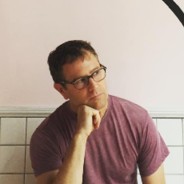
I didn't start in product. I started in books.
For seven years I worked at City Lights Bookstore in San Francisco — buying books, coordinating author events, building the store's first newsletter and podcast, and eventually redesigning the website. Somewhere in that work I discovered something that has driven everything since: I'm most interested in the space between a story and its audience. How does good work find the people who need it? What gets in the way? What makes someone come back?
That question led me to journalism school at UC Berkeley, where I focused on new media and multimedia storytelling. It led me to a decade in newsrooms — at KPCC/LAist in Los Angeles, where I built and led an 18-person digital team, launched data journalism tools like the Fire Tracker (embedded and republished by NPR, TIME, and the New York Times; recognized by the Society of News Design), led a four-station public-media election collaboration and its personalized MyBallot voter guide, and helped transform a public radio station into one of the best digital news operations in the country.
It led me to dot.LA, where I ran audience development and platforms for LA's premier tech news startup — building a loyal reader base from scratch, launching the quarterly VC sentiment survey that became one of the site's most-read recurring features, and learning what it actually means to earn an audience rather than rent one from Google.
And it led me to Hearst Magazines, where I've spent the last several years as a product manager building engagement tools across 30+ U.S. magazine websites — from AI-powered content recommendation systems to editorial AI features to mobile-first storytelling experiments designed for a world where search is no longer the primary way people find journalism.
The through line isn't journalism, and it isn't technology. It's the question I started with at City Lights: how does good work find the people who need it?
A record of my earlier journalism — a decade of bylines across KPCC/LAist, dot.LA, and Pacific Standard — lives on Muck Rack.
What I Believe
Digital publishing is at an inflection point, and I don't think better SEO or GEO practices are going to be enough to get through it.
To be clear: I believe in doing those things well. I've spent a meaningful part of my career on exactly this work — structuring content for discovery, building recirculation systems, tuning for search and now for AI-driven discovery platforms. It matters, and I'm glad to bring that expertise to any team or client that needs it.
But I don't think it's the problem the industry is actually facing. Search traffic is declining structurally, not temporarily, as AI-generated answers increasingly satisfy user intent without ever sending a reader to a publisher's site. No amount of better optimization reverses that trend — it can only slow the decline for a little while longer.
The organizations that come through this well are the ones building something optimization can't touch: a direct relationship with their audience. That means readers who come back because they trust a brand's voice, not because a search result led them there. It means investing in community, in owned channels like newsletters and apps, and in products that serve readers rather than algorithms.
I've spent a long time building toward this — first as a journalist who cared about whether stories reached people, then as a product manager who got to design the systems that determine whether they do. I want to help organizations do both things well: optimize for today's discovery landscape, while building the direct relationships that will matter most tomorrow.
What's Next
I'm always interested in talking with people working on these problems — whether that's a media company investing in audience relationships, a civic tech organization building tools for public information, or a team rethinking how content finds its readers. If that's you, get in touch.