
Challenge
Search engine traffic has been Hearst's largest source of audience for years — and it is declining. As Google shifts toward AI-generated answers and chatbots that deliver information directly without sending users to publishers' websites, the traditional SEO playbook is breaking down. Younger users, meanwhile, have built their media habits around a fundamentally different experience: mobile-first, visually rich, short-form, and social.
The strategic question we set out to answer wasn't “how do we optimize for search” — it was “what does audience development look like when search is no longer the primary on-ramp?”
My Role
I led a cross-functional discovery and experimentation effort to understand mobile-first storytelling formats and identify what could drive engagement, return visits, and eventual subscription conversion in a post-search environment:
- Defined the research agenda and ran usability testing across multiple vertical video and tappable storytelling formats
- Designed and ran a series of A/B and multivariate experiments using Optimizely across Popular Mechanics and Cosmopolitan
- Managed vendor relationships, including contract negotiations and onboarding
- Coordinated across editorial, social, video, engineering, ads, legal, and senior leadership to keep the initiative moving
- Established the measurement framework for the experiment series
Approach
1. Start With What We Already Had
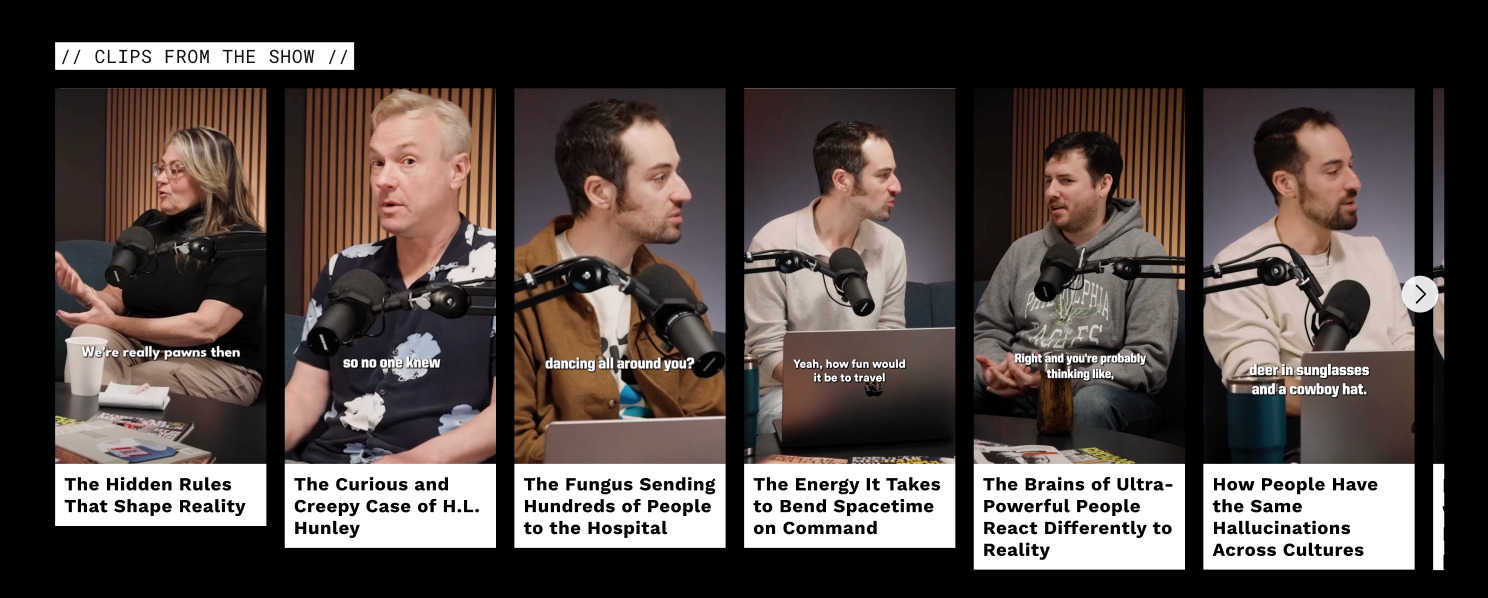
Rather than commissioning original video production or building native tools from scratch, we identified that Hearst brands already had substantial short-form video inventory performing well on TikTok, Instagram, and/or YouTube Shorts. That inventory represented a low-cost, fast entry point for on-site experimentation.
We used a third-party tool that could ingest social video and embed vertical carousels directly onto Hearst pages as a rapid experimentation layer. The goal was to learn quickly what formats, placements, and content types resonated with mobile audiences before committing engineering resources to a native build.
2. Run Usability Research Before A/B Testing
We first ran structured usability tests across multiple storytelling formats — vertical video “shorts” (TikTok-style) and tappable “stories” (Instagram-style) — to understand baseline user behavior before running statistical tests at scale.
Key findings: users found vertical video easier to navigate than tappable stories; users arrived at our sites with the mental model of a magazine, not a social media site; and users unfamiliar with the format needed more onboarding context before they understood how to engage with it. These insights shaped the A/B test design and saved us from scaling a format users couldn't figure out or didn't want.
3. Test Systematically, Isolate Variables
We ran sequential experiments on several sites to understand:
Location/Placement: Measured the incremental impact of adding a vertical video carousel to different sections, page types, and brands to understand the best bet for where to position the player.
Content Strategy: We tested different brand content strategies, including the franchises several brands had evolved on various social media sites to understand how they might perform on our own site.
Author Authority/ Presence: We experimented with different ways to present the content and how best to position our authors.
4. Discover the Real Value Proposition
We found trade-offs in every approach. Different brands found themselves with a strategy that was trading more user engagement for clicks elsewhere on the page. Others found deeper, personalized storytelling outperforming quick-hit news, trading more reporter involvement for deeper engagement and more returns from users. There was no one-size-fits-all solution; each site evolved a strategy that ultimately improved the user experience (and improved overall revenue). The real value became the method for sharing successes and strategies across multiple newsrooms not always used to coordinating with one another.
Results
- +15% increase in time spent per session on pages with vertical video carousel enabled
- 7.4% click-through rate from video to linked articles (strong recirculation signal vs. industry benchmarks)
- 3 completed experiments across brands (so far), each building on learnings from the last
- Clear content hierarchy established
- Foundation laid for in-house vertical video carousel MVP, with requirements defined and engineering roadmap in progress