
Challenge
Hearst's 30+ U.S. magazine websites — from Cosmopolitan to Popular Mechanics to Delish — each needs a different approach to automated recirculation (the modules that recommend what to read, watch, or shop next). Each brand has several such modules that appear at the page bottom, at the page top, and at different intervals in the body (sometimes determined by editors; other times determined by context). There was no way to test at scale, and no easy way to adapt recirculation to wildly different content types — a recipe on Delish behaves nothing like a longform feature on Men's Health, which behaves nothing like a beauty listicle on Cosmopolitan.
The result: editorial and design teams were burning hours on one-off builds, editors were frustrated at seeing unanticipated content showing in modules, and we had no systematic way to learn what actually drove readers to the next piece of content.
My Role
As Product Manager for Engagement, I led the initiative end-to-end:
- Directed a team of 8 engineers and 1 product designer
- Set research and testing priorities across multiple parallel work streams
- Owned the product strategy for rollout of recirculation modules
- Worked with another product team to consolidate recirculation into a single, configurable system
- Ran usability testing and user research to identify where readers were deciding whether to continue to another piece of content
- Designed and oversaw a continuous A/B testing program across brands
Approach
1. Build off the Foundation
Before we could optimize anything, we had to extend the infrastructure. We followed in the footsteps of another product team to consolidate several recirculation modules across Hearst's U.S. websites into a set of configurations — letting any brand change methods of serving content, placement, or design without new code or new design work. This turned recirculation from a one-off engineering request into a self-service capability for every brand.
2. Identify the User Need
We ran user research and usability testing to find the moment a reader decides whether to keep going or leave — and found that moment differs dramatically by content type. A recipe reader makes that call at a different point in the page than someone reading a longform feature or scanning a beauty roundup. This became the organizing insight behind everything that followed: recirculation isn't one problem, it's several, segmented by content type and user intent.
3. Test Systematically, By Content Type
With the configurable system in place, we ran focused experiments against that insight:
- Spotlight (top-of-page) recirculation: Tested multiple designs for surfacing content at the top of the page. A simple extension of the navigation bar outperformed more elaborate designs, improving the overall recirculation rate by an average of +13% across brands.
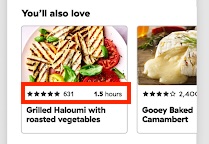
- Recipe recirculation: Used the usability research to pinpoint exactly where recipe readers decide whether to commit to a dish, then tested several module types in that spot. This single insight drove a +25% improvement in recipe recirculation across all brands.
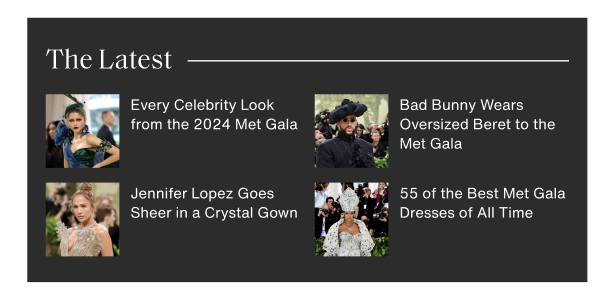
- Trending vs. related content: On lifestyle brands where celebrity content drives heavy traffic, we tested trending-content modules against other methods, with some interesting discoveries.
- Commerce-specific recirculation: Tested holiday and seasonal commerce content inside recirculation modules. The key finding: commerce content performs only when it extends a reader's already-demonstrated interest. Generic seasonal promotions, disconnected from what the reader was actually doing on the page, fell flat.

4. Build the System, Not Just the Wins
Rather than treat each test as a one-time win, we used the configurable infrastructure to turn this into an ongoing testing program — any brand could now run its own recirculation experiments on a regular cadence, using the same shared system.
Results
- +13% average improvement in recirculation engagement across brands (Spotlight placement)
- +25% improvement in recipe-specific recirculation
- Clear, repeatable winner identified for serving logic in specific contexts
- Major reduction in editorial and design time previously spent on bespoke, brand-by-brand recirculation builds
- 30+ U.S. magazine websites now operating on a single, testable, configurable recirculation system instead of one-off implementations